The Middle East is facing one of its most critical security crises in recent memory as Iran launched a sweeping drone and ballistic missile barrage targeting Bahrain and Kuwait. This aggressive military response followed intensive United States airstrikes on Iranian positions, highlighting the fragile state of regional security. With air raid sirens echoing across Gulf capitals and a commercial tanker struck in the vital Strait of Hormuz, the sudden escalation has shattered hopes of an immediate diplomatic breakthrough, exposing a stark divide between official optimistic rhetoric and the perilous reality on the ground. As global energy markets react to the maritime threat, the geopolitical stakes have reached an all-time high.
The Anatomy of the Attack: Drones and Ballistic Missiles Target Bahrain and Kuwait
The sudden offensive by Tehran triggered widespread panic across the Arabian Peninsula. According to official statements, Iranian forces fired a volley of ballistic missiles and explosive-laden drones targeting key strategic locations, including U.S. military facilities located within neighboring Gulf countries. In Bahrain, air raid sirens pierced the night, signaling an imminent threat to the island nation. Bahrain's Ministry of Foreign Affairs confirmed the attack, stating that its air defense systems, alongside allied military forces, successfully intercepted several of the incoming projectiles.
Meanwhile, neighboring Kuwait also found itself in the crosshairs. An Iranian strike tragically hit Kuwait's main airport, resulting in at least one reported fatality and significant disruptions to regional aviation. Tehran openly claimed responsibility for the barrage, justifying the attacks as a direct countermeasure against what it described as complicit hosts of American military infrastructure. This direct targeting of sovereign Gulf Arab states represents a dangerous shift in Iran's regional strategy, moving from proxy warfare to overt state-sponsored aggression that threatens the entire security architecture of the region.
U.S. Military Intervention and the Battle Over the Strait of Hormuz
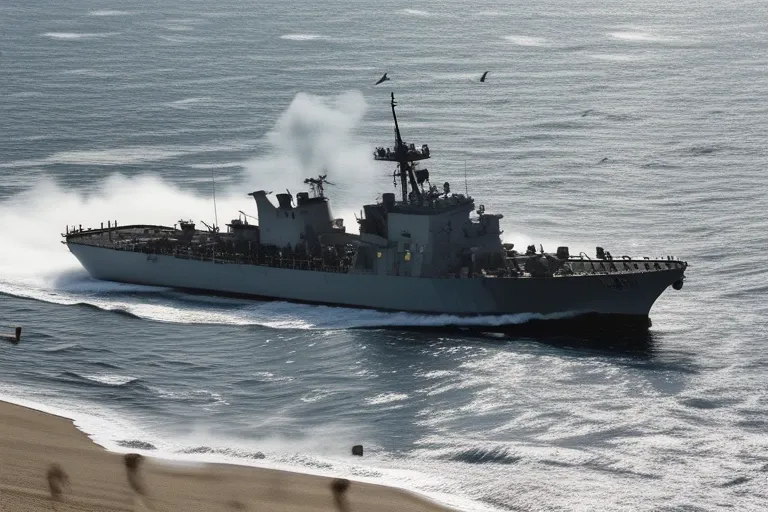
In response to the aerial onslaught, the United States military mobilized its defensive and offensive assets in the region. U.S. Central Command confirmed that American forces successfully shot down a significant number of Iranian drones and ballistic missiles launched toward the Strait of Hormuz and Gulf allies. U.S. defense officials disclosed that advanced missile defense systems, including Patriot batteries and Aegis-equipped destroyers stationed in the Persian Gulf, played a pivotal role in neutralizing the incoming threats. Despite the high interception rate, several projectiles bypassed the defensive umbrella, raising concerns about the sheer volume of Iran's missile arsenal.
The conflict has also spilled over into the vital maritime arteries of global commerce. In tandem with the missile strikes, a commercial tanker in the Strait of Hormuz was struck by an unidentified projectile. The British maritime security agency reported the incident, indicating that the strategic waterway remains a highly volatile flashpoint. This maritime attack directly threatens the free flow of energy supplies, triggering immediate anxieties across global oil markets. Analysts warn that any sustained disruption in the Strait of Hormuz could plunge the global economy into a severe energy crisis, affecting industries worldwide.

The Geopolitical Paradox: Rhetoric of Peace vs. Reality of War
This explosive escalation comes at a highly paradoxical moment in international diplomacy. For weeks, U.S. President Donald Trump has maintained an optimistic tone, repeatedly asserting that Washington and Tehran are on the verge of signing a landmark deal to wind down hostilities. Trump indicated that a memorandum of understanding was imminent, claiming that "it will all work out well in the end."
However, the reality on the ground paints a vastly different picture. The U.S. administration's "maximum pressure" strategy and the consecutive days of retaliatory strikes on Iranian targets have stalled actual negotiation progress. Behind the scenes, key strategic objectives remain unfulfilled, with critics pointing out that Trump's claims of an imminent diplomatic resolution contrast sharply with the escalating violence. This discrepancy has raised critical questions among Washington policymakers and international allies about whether the administration is being entirely transparent regarding the true state of negotiations.
Negotiations Stalled and Tensions Mount
The diplomatic deadlock is further complicated by internal political dynamics within both Washington and Tehran. While the Trump administration seeks a major foreign policy victory, its refusal to ease crippling economic sanctions on Iran has left Iranian leaders with little incentive to back down. Instead, Tehran has chosen a path of military defiance, aiming to demonstrate that it can exact a heavy price on the U.S. and its regional allies if its demands are not met. The failure of recent mediation efforts has left a dangerous vacuum, which both sides are currently filling with military force.
The Critical Role of Gulf Allies
For countries like Bahrain and Kuwait, the current conflict places them directly in the line of fire. These nations host key American military installations, making them prime targets for Iranian retaliation whenever tensions spike between Washington and Tehran. The recent attacks highlight the acute vulnerability of these Gulf states, which are forced to rely heavily on American air defense systems to protect their populations and critical infrastructure. The strikes have also forced these governments to reassess their security postures and call for stronger international guarantees to deter further Iranian aggression.
Conclusion: A Fragile Region Teetering on the Brink
The coordinated missile and drone attacks on Bahrain and Kuwait, coupled with the targeting of commercial vessels in the Strait of Hormuz, mark a dangerous peak in regional instability. Despite optimistic diplomatic claims from Washington, the exchange of military blows indicates that a peaceful resolution remains elusive. As the U.S. and Iran trade retaliatory strikes, the risk of a miscalculation leading to a wider regional war increases by the day. The international community now faces the urgent task of de-escalating the crisis before the fragile security architecture of the Gulf collapses entirely.